Louie Schwartzberg is not content to let us pass by the wonders of nature without taking a moment to be thankful. In this talk from TEDxSF, Schwartzberg shows his amazing time-lapse images of flowers blooming — which can take a month to film. “Theirs is a dance I will never tire of,” he says. “Their beauty immerses us with color, taste and touch.”
Wednesday, November 7, 2012
Louie Schwartzberg: Nature. Beauty. Gratitude.
Louie Schwartzberg is not content to let us pass by the wonders of nature without taking a moment to be thankful. In this talk from TEDxSF, Schwartzberg shows his amazing time-lapse images of flowers blooming — which can take a month to film. “Theirs is a dance I will never tire of,” he says. “Their beauty immerses us with color, taste and touch.”
Louie Schwartzberg is not content to let us pass by the wonders of nature without taking a moment to be thankful. In this talk from TEDxSF, Schwartzberg shows his amazing time-lapse images of flowers blooming — which can take a month to film. “Theirs is a dance I will never tire of,” he says. “Their beauty immerses us with color, taste and touch.”

Monday, October 22, 2012
Quote of the day
“The plants that produce visions can function- for those of us who have inherited the New World Order of barren materialism, cut off from our spiritual heritage by a spiteful culture that gives us nothing but ashes- as the talismans of recognition that awaken our minds to reality.”
-Daniel Pinchbeck, Breaking Open the Head: A Psychedelic Journey into the Heart of Contemporary Shamanism
-Daniel Pinchbeck, Breaking Open the Head: A Psychedelic Journey into the Heart of Contemporary Shamanism
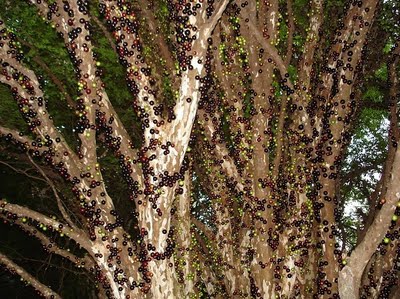
The Tree that Fruits on its Trunk
Myrciaria cauliflora (JABOTICABA)
Jaboticaba is a beautiful, and strange fruit tree, which despite being from Brazil, is amazingly cold tolerant. The delicious fruit has a short shelf life, making it a poor choice as an orchard crop, but they are excellently suited as a dooryard fruit. Many different species of trees in the genus Myrciaria are referred to as jaboticaba in Brazil, but the species most commonly grown outside of Brazil is M. cauliflora.
The word "jaboticaba" is said to have been derived from the Tupi term, jabotim, for turtle, and means "like turtle fat", presumably referring to the fruit pulp.
Jaboticaba trees are notorious for taking many years to begin producing. Growth is so slow that a seedling may take 3 years to reach 18 in (45 cm) in height. However, a seedling tree in sand at Orlando, Florida, was 15 ft (4.5 m) high when 10 years old. Others on limestone at the United States Department of Agriculture's Subtropical Horticulture Research Unit were shrubby and only 5 to 6 ft (1.5-1.8 m) high when 10 and 11 years old. Seedlings may not bear fruit until 8 to 15 years of age, though one seedling selection flowered in 4 to 5 years. Grafted trees have fruited in 7 years. One planted near Bradenton, Florida, in bagasse-enriched soil started bearing the 6th year. The fruit develops quickly, in 1 to 3 months, after flowering.
The flowers themselves appear on the tree at most twice a year –naturally. They look like some strange alien creature that has deposited itself on the trunk and branches. The habit of flowers doing this makes them cauliflorous. Instead of growing new shoots these plants flower direct from the woody trunk or stem. You might ask why it is this way. The simple answer is that it has evolved in this manner so that animals that cannot climb very high can reach it, eat it and then expel the seeds away from the parent tree to further propagate the species.



Wednesday, October 10, 2012
Trail Marker Trees
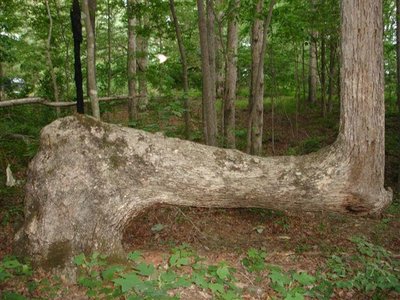
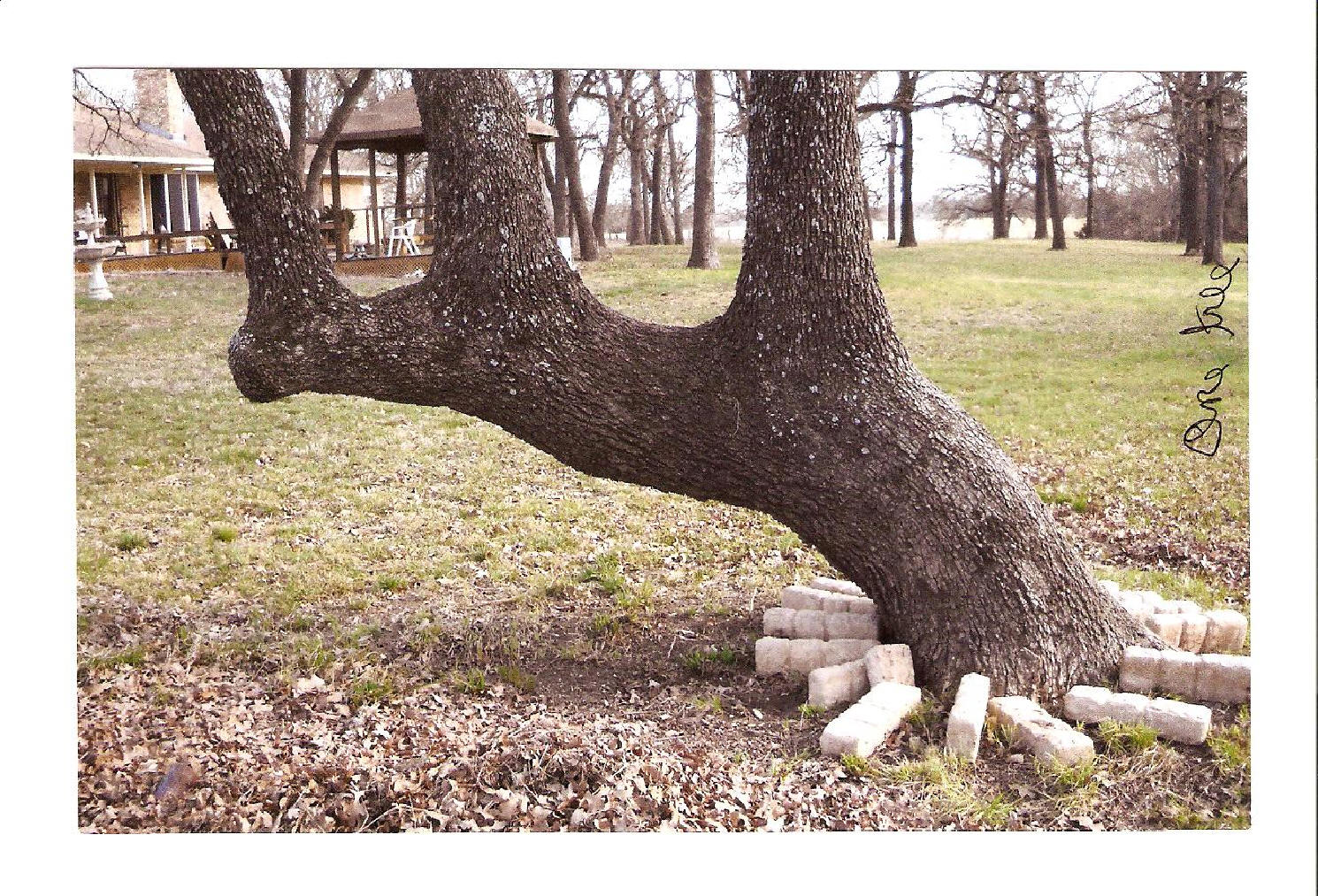
Across the U.S., you can find trees that are oddly shaped. Their trunks have odd kinks in them, or bend at strange angles. While some of them may indeed be simple quirks of nature, most of these trees are actually landmarks that helped guide indigenous people on their way. Native Americans would bend young trees to create permanent trail markers, designating safe paths through rough country and pointing travelers toward water, food or other important landmarks. Over the years, the trees have grown, keeping their original shape, but with their purpose all but forgotten as modern life sprang up around them. Today, we may not need these “trail trees” to navigate, but their place in history makes them invaluable. Imagine the stories these trees could tell.
Although the exact mechanics of how Native Americans bent the trees is unknown, Mountain Stewards has been able to shine light on the basics of the process.
The Indians took a small sapling and bent it horizontal to the ground. The tree was tied to the ground for a year, allowing it to grow into a bend. At the end of that year, the Indians would bend the tree again and begin shaping it for its particular function. Marker trees typically had a “nose” on the front, which would atrophy or be cut off after the initial bending process. The bending process usually took between five and 10 years.
Besides trail markers, the trees served as, prayer trees, medicine trees, campsite markers, witness trees and grave markers. The Utes in the west used Ponderosa Pines as prayer trees. Every year during their spiritual pilgrimage, the tribe would return to their tree and continue the bending process. Once the process was complete, the Utes would offer tobacco to the tree because they believed their ancestors resided there.
The trees also played a part in human healing processes. The cambium layer of bark, inside the outer and inner layer of bark contains as much calcium as nine glasses of milk. Indians in some tribes would eat this bark to nourish themselves to survive the winter.
Many of the trees used as markers in the south were white oaks; these trees have been found to mark water and trails. The Comanche Indians used pecan trees as campsite markers to mark favorable sites with high bluffs and flat ground near water.
Other marker trees known as “witness trees” were carved with messages that only Indians knew how to read. This practice was adopted by early American settlers for use in surveying.

Sunday, September 30, 2012
Wolfgang Laib, Pollen from Hazelnut
Days, months and years of labor laid right before your eyes, materialized. Laib’s piece reminded me of the artworks of Buddhist monks – pieces made of ephemeral, powdery materials on the floor that are diligently worked on over long spans of time, but could be destroyed in an instant. Wolfgang Laib lives and works in the same small village in Germany that he did as a child, collecting pollen by hand every year during the spring and summer. As the name implies, the pollen in this piece was collected from hazelnut bushes. It was as if Laib was a worker bee himself, exhibiting the results of his efforts.
Thinking about Laib’s ritual – a set of repeated actions done with an intended meaning or consciousness – of collecting the pollen and his intimacy with the material and his natural surroundings makes me feel an odd sense of intimacy and introspection myself.
"I am not afraid of beauty, unlike most artists today. The pollen, the milk, the beeswax, they have a beauty that is incredible, that is beyond the imagination, something which you cannot believe is a reality–and it is the most real. I could not make it myself, I could not create it myself, but I can participate in it. Trying to create it yourself is only a tragedy, participating in it is a big chance."


Friday, September 28, 2012
Trembling Giants Adansonia digitata (Baobab)


It's a strange giant with branches that look like roots reaching up to the sky. Bushmen legend tells how, in a frivolous mood, the gods tossed the baobab to the Earth below where it landed. Wrong side up. Bushmen still believe that the baobab doesn't grow like other trees, but crashes to the ground fully grown.
The African baobab tree is known as the tree of life; it is capable of storing life-saving water during the drought season which is vital to local nomadic people who may not have any other means of obtaining water. Large baobab trees are said to contain more than 30,000 gallons of water; to access this water, the Kalahari bushmen use hollow pieces of grass (much like a straw) to suck the water out.
The baobab tree is a vital nutrition source for many local tribes; the fruit of the baobab tree contains both pulp and seeds which are eaten. The pulp can also be mixed with water and made into a drink; the seeds of the baobab tree can be eaten alone or mixed with millet. The seeds can also be traded for the extraction of the oil or eaten in a paste; seedlings and young leaves are eaten like asparagus or are used in salads.
The hollow trunk of the tree (either aged naturally or through human intervention) is a place where native people have stored grain, water or livestock. The size of some baobab trees is so great that natives have used the hollow of the baobab tree trunk in which to live.
The medicinal uses; the baobab tree is high in vitamin C and calcium and therefore the leaves and fruit are eaten to protect against illness. The bark of the African baobab tree is used to treat fever; its medicinal use was considered to be of such value that Europeans used the bark in place of cinchona bark (from where quinine was obtained) to protect against malaria.
The inner workings of the tree provide a fiber which indigenous people have used to make cloth, rope, nets, musical instrument strings and waterproof hats. The bark of the baobab tree has to be removed to obtain the fiber; the baobab tree can regenerate the loss of bark if it is cut away.
Superstition surrounds the tree. It develops a hollow trunk said to be inhabited by spirits who haunt anyone foolish enough to cut it down. It’s revered as a repository for ancestral souls and the community’s spiritual power. Some believe that if you pick a flower from a baobab, you will be eaten by a lion; but if you drink water in which a Baobab’s seeds have been soaked, you’ll be safe from a crocodile attack.
Baobabs are hard to kill. They can be burnt and stripped of bark but quickly regenerate. When they do die, they rot from the inside and suddenly collapse with great noise, leaving behind only a heap of fiber. Many believe that they don’t die at all, but simply disappear as mysteriously as they arrive.
"People look at a tree and think it comes out of the ground, that plants grow out of the ground, but if you ask, where does the substance [of the tree] come from? You find out ... trees come out of the air!" -Nobel laureate Richard Feynman
Subscribe to:
Posts (Atom)