Saturday, November 24, 2012

Fungi Ganoderma lucidum (Red Reishi)


Ecology:
Saprotrophic, meaning it feeds on dead organic matter. Look for them on dead or dying trees and old stumps or logs.


Habitat:
Grows on hardwood stumps and logs including oaks, elms, beeches, maples, and more. The tsugae species seems to prefer conifers, mainly hemlocks(tsuga means hemlock).

Cap:
Kidney or fan-shaped and reddish with a wet, lacquered appearance when young. The shiny, reddish cap is one of the main identifying features of reishi mushrooms. As they age the flesh becomes tougher and spores drop. Air currents often blow these spores to the top of the mushroom, dulling its shiny cap.
The cap rarely gets larger than a foot across and an inch or two thick. It may or may not be attached to a stem.
The newest growth often shows up as a whitish edge. A main difference between the two species is that Ganoderma lucidum has a more brownish flesh color and Ganoderma tsugae has whiter flesh.

Reproduction:
Spores come out of tiny pores on the underside of the mushroom rather than gills. This is why they're known as polypores (poly means "many").

Spore print:
Brown in both species.

Range:
Ganoderma lucidum prefers warmer regions and is found in many parts of Asia, Australia, South America, Southern Europe, and the Southeastern United States. Ganoderma tsugae likes colder temperatures, and can be found as far as the Northeastern United States.

Time of year:
Summer to fall for all species.


The Reishi mushroom is well known for its immune boosting capabilities. In ancient China it was referred to as the mushroom of immortality and eaten exclusively by royalty due to it rarity. Medicinal use of Reishi dates back over 4000 years.

Chinese and Japanese herbalists have traditionally recommended Reishi mushrooms for insomnia. Long-term use influences their sleep-promoting factors as it increases slow-wave sleep.

Other studies report that Red Reishi improves both neurological and psychiatric conditions including muscle tension, anorexia and debility following lengthy illnesses.

In Japan, the root-like body that produces mushrooms, known as the dried mycelium, has been found to be highly effective in the treatment of conditions related to environmental stress.

Red Reishi is primarily composed of complex carbohydrates called water-soluble polysaccharides, triterpeniods, proteins and amino acids. Researchers have identified that water-soluble polysaccharides are the most active element found in Red Reishi that have anti-tumour, immune modulating and blood pressure lowering effects.

Another major active ingredient found in Red Reishi are triterpenes, called ganoderic acids. Preliminary studies indicated that ganoderic acids help alleviate common allergies by inhibiting histamine release, improve oxygen utilization and improve liver functions.

Regular consumption of red Reishi can enhance our body's immune system and improve blood circulation, thus improving better health conditions. Generally, Reishi is recommended as an adaptogen, immune modulator and a general tonic. It can also be helpful for anxiety, high blood pressure, hepatitis, bronchitis, insomnia and asthma.


Sunday, November 18, 2012

Nick Knight: Flora

For the past three decades Nick Knight has defined the cultural vision of a generation. Consistently challenging conventional notions of beauty, Knight has reinterpreted the boundaries of contemporary fashion photography. In groundbreaking collaborations with an array of leading designers including Yohji Yamamoto and Alexander McQueen, he has shaped many of the iconic images that fill our minds through magazines, books, record albums, and music videos.

Saturday, November 17, 2012

Holy Botany Pistacia atlantica

The only Living Sahabi Tree, The Blessed Tree 

“The Prophet sitting under this tree, and its reacting to the Prophet makes the tree the only living terrestrial witness to the Prophet , what we would call in Arabic a sahabi.” -H.R.H. Prince Ghazi bin Muhammad 


Description
Deciduous tree up to 7 m, with a dense, subglobose crown. Leaves impair-pinnate; leaflets 2-5 paired, ovate-oblong or lanceolate. Fruits paniculate, 5-8x5-6 mm

Flowering
March-April.

Habitat
Dry hillsides, edge of field, up to 1,500 m.

Distribution
Irano-Turanian, extended to North Africa.

Use
Expectorant, sudorific, heart stimulant (fruits); sterility, colic, tonic, digestive, depilatory, gums strengthening, resolutive for furuncles (resin); expectorant, diuretic; asthma, chest diseases (galls); masticatory, to purify the breath (resin); stomach disorders (crushed nut of the fruit); cough, cold (external friction with oil from fruits); intestinal disorders (decoction of leaves and galls, in Morocco), antiseptic for wounds (resin). 

In Iraq, the seeds are used for tanning and for soap-making. In the past, this species was considered to grow only in North Africa, where it had been described, while, in the Middle East, it was not distinguished from Pistacia terebinthus L., to which it is really very close. A famous product from this tree was the "turpentine of Chio", which is in fact the resin, very well known for its therapeutic value, and exported even to Europe, especially during the nineteenth century. The resin is produced by particular cells which secrete it into special ducts crossing the cortical parenchyma. The leaves of Pistacia atlantica often have galls, which are rich in tannins and are used to tan skins, beside their therapeutic use.
Additional Information
Notwithstanding its scientific name, this species has its primary origin not on the Atlantic Ocean, but in the Iranian Plateau, from where it migrated to reach North Africa to the East and Palestine to the South. Pistacia atlantica was a common tree in the past in the whole area, but since it was also almost the only tree it was super-exploited for its wood, and is now localized on some mountains such as Jebel Bel‘ās, which derives its name from the tree.


Both the Qu'ran and the Bible were birthed in the Middle East. As Scriptures that reflect their cultural origin among nomadic and agrarian societies, plants naturally play a prominent role in the imagery of these books. Much more than providing food, fiber, and shelter, plants are used for a variety of divine impressions. For example, in the Qu'ran, food plants are often viewed as the gracious provision of God. In the Bible, religious cult involves the use of prescribed plants and plant products, e.g., incense and anointing oil.


A good example is the use of trees as figures of righteousness and stability. This "good tree/bad tree" "good person/bad person" image is prominent in both books. Tree worship may sound like a practice restricted to the ancients but it is still possible to see trees in rural areas of Syria and Jordan decorated in honor to a dead person, i.e., a good person is like a good tree. Most of the trees that have been decorated in this way are buttim (Pistacia atlantica).


The Story

Off the heavily treaded trucking route, in the northern desert of Jordan, between Azraq and Rweished is a road left behind by long-gone empires that leads to a site of prayer, reflection and refuge.
During the Prophet Mohammad’s journey to Damascus with his uncle, Abu Talib, the caravan faced a dangerous trek through the vast stretches of desert between Mecca and Damascus, and is believed to have stopped over near what is now Safawi. It is here in a site called Biqawiyya that Mohammad - as young boy - rested under the shade of a pistachio tree, which still stands today, according to residents.
As if by some miracle, the tree has a small water source at its base, standing defiant against the barren desert and blazing sun, with scores of cloth ribbons tied to its branches by worshippers coming to pray.
Now walled off as part of a complex built and operated by the Ministry of Awqaf and Islamic Affairs, the tree stands with outstretched branches, seemingly welcoming all who make the journey.

Some believe the tree to be the place where the Prophet Mohammad met with the Christian monk Bahira, an encounter documented by Islamic historians. Upon seeing Mohammad under the tree, he declared him a prophet and told Abu Talib to take care of him and protect him, according to Islamic historians.
However, many people believe the encounter took place at Kastram Mafaa, in present-day Umm Rassas, or at Bosra in Syria, and that the Biqawiyya tree was merely a resting stop for young Mohammad on his way to Damascus.
Some dispute the age of the tree itself, claiming that the pistachio tree is not over 1,500 years old as local residents claim.
No matter what story is attached to it, Biqawiyya is truly a sight to behold, a miracle in any sense.

Wednesday, November 14, 2012

Quote of the day

“We need to treat plants, their spirits, our totems with more regard and reverence than we have. We need to stop only approaching them with the mindset of usefulness and consumption, and confront our biases and human chauvinism. We need fewer herbal[ist]s that treat plants and fungi as our personal medicine cabinet, and more thought toward dried herbs as sacred remains.”
–Lupa

Friday, November 9, 2012

Ten Extremely Rare Seeds on the Brink of Extinction

Name: Mulanje Cedar (Widdringtonia whytei)
Status: At the brink of extinction, this species of cypress is confined to Mount Mulanje, a 9,852-foot-tall massif in southern Malawi, where only a small stand of the trees survives. 
Threats: Mulanje Cedars are known for their sweet- smelling and, more important , termite-resistant timber, which has been used in the construction of door and window frames, as well as local arts and crafts. In 2007, it became illegal to fell the cedars, which typically grow to a height of about 150 feet at altitudes upwards of 6,500 feet. Yet a black market for the wood persists.
Impact: The decline of the species—Malawi’s national tree—is a tough financial blow to Malawi, one of the world’s least-developed countries.


Name: Three Nerved Alsinidendron (Alsinidendron trinerve)
Status: The current population of Three Nerved Alsinidendron consists of less than 50 mature shrubs on just two adjacent peaks in the Waianae Mountains of Oahu, Hawaii. The International Union for Conservation of Nature’s Red List classifies the species as critically endangered.
Threats: It is reported that numbers of the flowering plant, part of the carnation family, are dwindling as a result of grazing feral goats and pigs, human disturbance and the spread of Florida prickly blackberry, an aggressive invasive species.


Name: Erica verticillata
Status: The shrub, with tubular pink flowers that blossom in the summer, was considered extinct for much of the 20th century. The last wild plant was recorded in 1908, in its native habitat in South Africa’s Cape Peninsula. However, using seeds collected from a single plant discovered in Pretoria, South Africa, in the 1980s, and a few other specimens identified in botanical gardens, the species has been reintroduced to a few sites near Cape Town. 
Threats: As the city of Cape Town expands, over 90 percent of the plant’s damp, sandy habitat (called sand fynbos) has been destroyed. The Millennium Seed Bank and its partners are working to restore the remnants of the habitat that are left and to reclaim others. 


Name: Syrian bear’s breeches (Acanthus syriacus)
Status: The spiny perennial herb is found in southern Turkey, Syria, Israel and Jordan, but it is endangered in Lebanon. It took four years and multiple trips, from 1998 to 2002, for Millennium Seed Bank scientists to locate a few healthy, seed-bearing plants.
Threats: “Acanthus” comes from the Greek word “akanthos,” meaning spine. Syrian bear’s breeches resemble the spiky stems of pineapples, yet they grow upwards of 20 inches tall. Since the sharp plants can be harmful to curious livestock, Lebanese farmers cut them down before they reach maturity.


Name: Tsodilo daisy (Erlangea remifolia)
Status: Only 50 or so plants remain in the Tsodilo Hills of northwest Botswana.
Threats: Each year, thousands of people visit the Tsodilo Hills, a Unesco World Heritage s ite, to see what has been called the “Louvre of the Desert,” over 4,500 rock paintings in a nearly four-square -mile area of rock outcrops in the Kalahari. The San Bushmen, who consider the hills to be sacred, made the paintings of animals, human figures and geometric designs, which date from the Stone Age to the 19th century. Unfortunately, the tourism boom and development has threatened the Tsodilo daisy. When a team from the project visited to collect seeds, they were lucky to spot the purple daisies of a single plant on a rock ledge somewhat removed from tourist traffic.


Name: Yunnan wild banana (Musa itinerans)
Status: Native to China’s Yunnan province, this wild pink banana is vulnerable, according to the IUCN’s Red List.
Threats: Deforestation is the biggest threat to the species. The mountainous forest habitat of Musa itinerans, a wild relative of the domesticated banana, is being razed for commercial agriculture.
Impact: Asian elephants are losing a staple food source—and we may be too . As far as bananas go, we have put most of our energies into cultivating one variety for consumption, the Cavendish. Yet a fungus has run rampant in that species. Since t he Yunnan wild banana is a close relative to the bananas and plantains we consume, and it has proven to resist common banana diseases, it could be useful in breeding new varieties. 
Interesting Side Note: Musa itinerans was the 24,200th species to be stored, a milestone for the seed bank . When the seeds were collected in 2009, it meant that the bank had met its initial goal of conserving 10 percent of the world’s species by 2010.


Name: St. Helena boxwood (Mellissia begoniifolia)
Status: In the late 1990s, after a century or more of thinking it extinct, conservationists located a few surviving Mellissia begoniifolia on St. Helena, a 50-square-mile island in the South Atlantic. The IUCN listed the species critically endangered in 2003, and by 2010, only one shrub clung to life. That lone survivor has since died, and so the species is considered extinct in the wild. Efforts are being made to cultivate new plants from seeds and reintroduce them to the island.
Threats: Aphids and caterpillars often infest the plants, and mice, rabbits and goats nibble on them. The boxwoods grow between boulders along the coast and often suffer from drought. The rocks can also shift, crushing the plants. 


Name: Starfruit (Damasonium alisma)
Status: Once found in several counties of England, the now critically endangered starfruit is limited to just a few sites in Buckinghamshire, Berkshire and Surrey. It is illegal to pick or intentionally damage the plant.
Threats: The aquatic plant, with white flowers and star-shaped fruits, prefers the edges of muddy ponds, turned up by cattle in the pastures looking for a drink. But development has made this habitat scarce.


Name: Shining Nematolepis (Nematolepis wilsonii)
Status: In February 2009, fires destroyed the last known population of shining nematolepis growing in a forest about 60 miles east of Melbourne. The Victorian Conservation Seedbank of the Royal Botanic Gardens Melbourne, a partner of the Millennium Seed Bank, is working to bring the Australian species back from extinction, having planted more than 150 plants grown from banked seeds near the original site.
Threats:
 There is always the danger that the flowering tree will fall victim to more brush fires. But even before the fires, the species had diminished, in part because of sambar deer, introduced to Australia from southern Asia in the 1860s. Apparently, the tree is just the right texture for the deer to rub against to de-velvet their antlers each spring. In the process, the trees are damaged or killed.


Name: Pribby (Rondeletia buxifolia)
Status: Botanists located pribby—known only by a mention in a field book—on the Caribbean island of Montserrat in 2006. A member of the coffee family, the critically endangered species grows in a 6.5-square-mile area.
Threats: Eruptions of Montserrat’s Soufriè re Hills volcano in the mid-1990s obliterated a large portion of the island’s dry forests, where the orange-flowered shrub grows. The still-active volcano is a constant threat. Pribby competes with invasive species for what little habitat is left, and goats and other animals munch on most new growth.


Wednesday, November 7, 2012

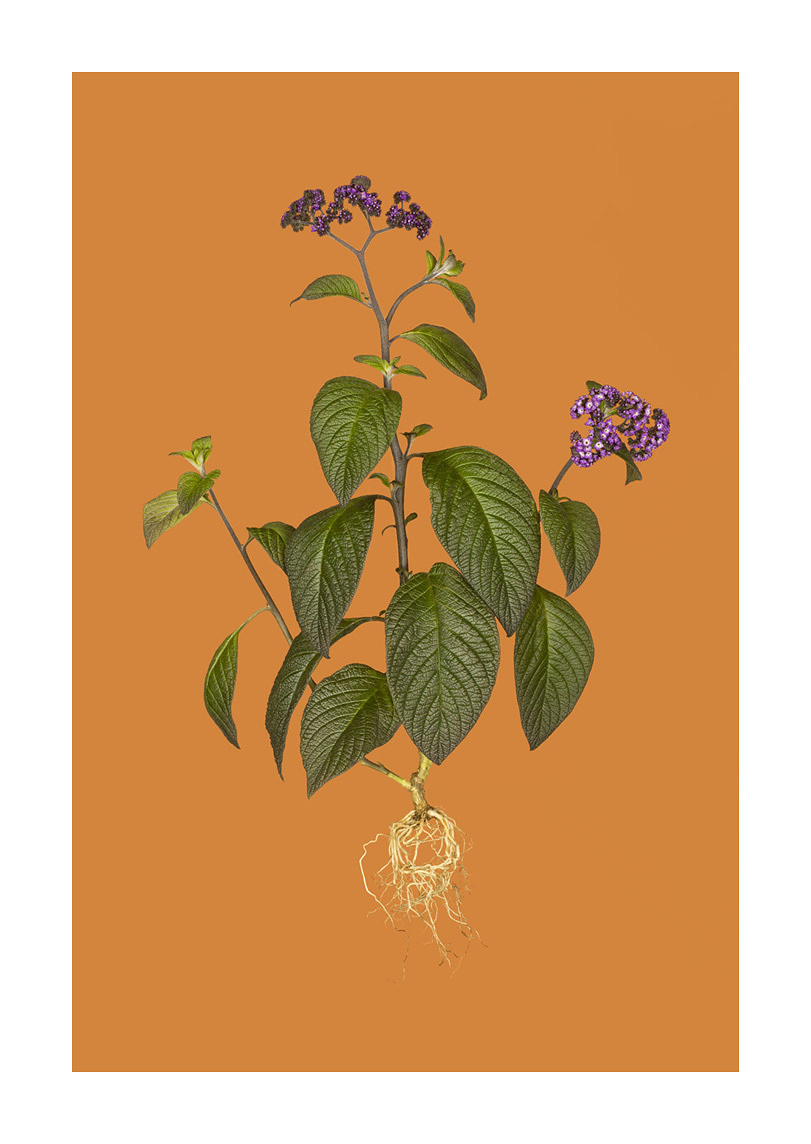
William Rugen: New Botanicals

New Botanicals evokes 19th Century botanical illustrations through these modern photographic interpretations.

"The nucleus for "New Botanicals" is a love for the botanical prints of the 18th and 19th centuries. There is a great cross-pollination of art and biology in those prints that I wanted to somehow capture. I see my images as both an homage and graphical update to those prints.
I want to find a balance between the grace of the visible plant and the mechanics of its growth engine, the roots.  I like the idea that this amazing object could not exist without the inelegant tangle that is just out of sight.  It is a reminder that everything of beauty or value requires a certain amount “ugliness” to come to fruition."


Louie Schwartzberg:  Nature. Beauty. Gratitude. 

Louie Schwartzberg is not content to let us pass by the wonders of nature without taking a moment to be thankful. In this talk from TEDxSF, Schwartzberg shows his amazing time-lapse images of flowers blooming — which can take a month to film. “Theirs is a dance I will never tire of,” he says. “Their beauty immerses us with color, taste and touch.”